

FIEX®
|
|
| Trademark: | FIEX |
| Origin: | UK Trademark for Sale |
| Category: | Class 22 - Ropes /Fibres |
| Status: | Fully registered, dispute-free, and ready for transfer with goodwill. |
| Price: | $1,900 |
| Domain Notice: | Domain not included. |
| Registration No.: | UK00004260244 |
| Serial No.: | UK00004260244 (Go to the official page for details.) |
| Goods /Services: |
Dog, rabbit and alpaca hair for stuffing or padding purposes; Acrylic fibers; All-purpose nylon straps; All-purpose nylon straps featuring hook and loop fasteners; All-purpose straps comprised of synthetic textile materials [excluding artificial leather]; All-purpose tarpaulins of plastic; Alpaca hair; Anchoring ropes; Angora goat hair; Angora hair; Animal feeding nets; Animal hair; Arrays of resilient plastic straps that may be arranged in prescribed angular orientations relative to each other to accommodate objects of different sizes, shapes and configurations in any one of a multiplicity of different arrangements; Artificial hair for stuffing and padding purposes; Awnings comprised primarily of tensile fabric membranes; Awnings for vehicles of textile or synthetic materials; Awnings of textile; Awnings of textile or synthetic materials; Bags for composting kitchen, garden, and other organic material; Bags for securing valuables; Bags for washing hosiery; Bags specially adapted for holding rope; Baling twine; Bamboo fiber; Banister ropes; Bank deposit bags; Bath toy organizers in the nature of net bags secured by suction cups; Bed tents; Belts, not of metal, for handling loads; Binding twine made of natural textile fibres; Bivouac sacks being shelters; Body bags; Bottle envelopes of straw; Brattice cloth; Bungee cords; Bungie cords; Burlap wraps for plants; Cables, not of metal; Camel hair; Camouflage nets; Camouflage nets for radar use; Camouflage nets for visual and radar uses; Camouflage nets for visual use; Canopies comprised primarily of tensile fabric membranes; Canopies of textile or synthetic materials; Canvas bags for laundry [not for luggage or travel]; Canvas bags for storage of food, grain, not luggage or travel bags; Canvas canopies; Canvas tarpaulins; Canvas wraps for plants; Car towing ropes; Carbon fibers for textile use; Carbon fibres for textile use; Carded wool; Cargo and carrier equipment for vehicles comprised of synthetic textile materials, excluding artificial leather, namely, tow ropes, tow straps, ratchet tie-down straps, quick release tie down straps, lashing straps, and tarp straps; Cargo slings of rope or fabric; Cattle hair [not for textile use, not for brushes]; Chemical fiber bags for industrial use; Chemical fiber nettings; Chemical fibers for textile use; Climbing ropes; Cloth bag for storing and dispensing plastic bags for household use; Cloth bags for laundry [but not luggage or travel]; Cloth bags for stacking and storing diapers and blankets; Cloth bags for storage [but not luggage or travel]; Cloth bags specially adapted for the storage of diapers; Clothes pin storage bags; Clothesline; Coarse animal hairs; Coconut fiber; Coconut fibers; Coconut fibre; Cocoons; Combed wool; Commercial fishing nets; Commercial nets; Concrete curing blankets made of textile; Cord; Cordage; Cordage made of hemp; Cords for hanging pictures; Cords made of textile fibres; Cotton bags for industrial use; Cotton batting for futon; Cotton batting for use in quilts and clothing; Cotton fibers; Cotton netting; Cotton tow; Cotton wadding for use in quilts and clothing; Cotton waddings for clothes; Cotton waste; Cushioning not of rubber, plastic or paper in the nature of stuffing; Disposable bulk container liners; Down feathers; Down feathers for stuffing material; Down feathers for use as stuffing; Drop cloths; Dust sheets; Eiderdown [feathers]; Elastic bands for binding; Elastic bands for securing rolled garments for travel; Elastic netting for meat products; Esparto grass; Fabric and polyester mesh net used for storing toys and other household items; Fabric cabanas; Fabric mailing pouches; Fabric wadding for water filtering; Feathers and downs; Feathers for bedding; Feathers for stuffing; Feathers for stuffing upholstery; Fiber rovings for textile purposes; Fiberfill; Fibers for the manufacture of gut for rackets and fishing; Fishing nets; Flax fiber [raw]; Fleece wool; Flexible and portable plastic bag for carrying gasoline or other liquid petroleum fuels; Flock for stuffing; Floss silk; Garden nets [tarpaulins]; Garment bags for storage; Garment bags for storage of sweaters, shoes and scarves. General utility bags for commercial use; Glass fiber netting; Glass fibers for textile use; Glass fibres for textile use; Groundsheets; Grow tents; Guy lines not of metal; Hammocks; Hanging mesh net used for storing sports balls; Heavy-duty bags for disposal of building materials and refuse; Heavy-duty bags for recycling and disposal of building materials; Heavy-duty bags for recycling and disposal of building materials, namely roofing shingles and bricks; Hemp fibers; Hemp fibres; Hemp for textile use; Hemp nettings; High-density polyethylene plastic bags for the storage of household items; Horsehair, not for textile use and not for brush-making; Show All ▼
|
| Notes: |
◆ Ideal for businesses on Amazon, Walmart, TikTok Shop, Temu, and more.
◆ Secure end-to-end transaction with step-by-step platform support. ◆ This trademark may no longer be available. Please check with us. |
| Tags: |
|
1. What You'll Receive Upon Purchase:
- Upon completion of the trademark assignment, you will receive legal ownership of the trademark and all associated rights.
- Any domain names, if included in the sale, will be transferred to you within 1–7 days.
- You will gain exclusive eligibility for Brand Registry on Amazon, TikTok Shop, Walmart, and more.
2. Verified Ownership & Legitimate Sale:
We have verified that the seller is the lawful owner of this trademark, so you can purchase with confidence.
3. Good Standing & Free of Disputes:
This trademark is fully registered and is currently active and in good standing. Prior to finalizing the transaction, we will conduct a final verification to confirm that the trademark remains active, valid, and free from any disputes, liens, or encumbrances. We will not facilitate the sale of invalid, abandoned, or contested trademarks.
4. Your Neutral & Secure Broker:
We act as a neutral third-party platform that leads and manages trademark transactions from start to finish. Our services cover every step of the process—from communication and document preparation, payment collection, transfer submission, ownership handover, and final disbursement to the seller.
5. 100% Transfer Success Guarantee:
Your trademark purchase is backed by our 100% transfer guarantee. If the trademark or domain transfer fails for any reason, we will provide you with a full, no-questions-asked refund.
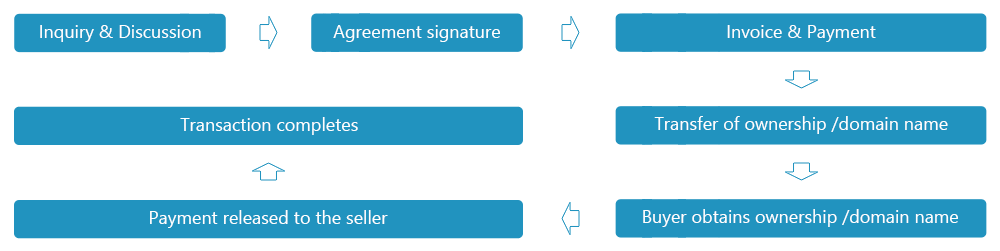
1. Agreement:
We prepare and have both seller("Assignor") and buyer("Assignee") sign the Trademark Assignment Agreement. The signed Agreement forms the basis of the transaction and ownership transfer.
2. Invoice & Payment:
Upon execution of the Agreement, we issue a PayPal/Escrow invoice to buyer for payment, which is securely held by PayPal/Escrow until buyer confirms receipt of ownership and rights.
3. Ownership Transfer:
◆ Filing: We file the assignment with relevant trademark office and provide buyer with official Assignment Filing Receipt.
◆ Approval: Upon official approval, we furnish buyer with official Assignment Recordation Notice.
◆ Timeframe: USPTO(currently 8–12 weeks) | EUIPO(3 weeks) | UKIPO(2 weeks).
◆ Domain Name: Any included domain names are transferred to buyer within 7 days. See Domain Transfer Between Registrars.
4. Completion:
Upon confirmation of ownership by buyer, PayPal/Escrow releases funds, we remit payment to seller, and transaction is completed.
1. Keep using the trademark in commerce.
Keeping and using your trademark in commerce is crucial for its protection, validity, distinctiveness, defense against challenges, and overall business reputation. Regular and genuine use helps ensure that your trademark maintains its legal significance and serves as an effective tool for brand recognition and consumer trust.
2. Designate a new correspondent for your trademark.
The trademark correspondent is the primary contact for official communications regarding the trademark. In most cases, the trademark owner's attorney serves as the correspondent and manages the trademark's legal matters. As the new owner, we recommend designating your own trusted trademark attorney as the correspondent to ensure you receive all future official communications promptly and your trademark is properly monitored and maintained.
Under USPTO rules, U.S.-based trademark owners may designate themselves as the trademark correspondent through their USPTO.gov account and provide their own email address for official communications. The process typically takes just a few minutes, and we provide a step-by-step guide for our clients.
3. Renewal and Maintenance.
As per official rules, trademarks require ongoing renewal and maintenance to remain valid and enforceable.
For U.S. trademarks, you can check your registration status, maintenance deadlines, and filing requirements through the USPTO's TSDR system (https://tsdr.uspto.gov). To keep your registration active, submit all required filings and fees on time. Otherwise, your registration will be canceled! Your trademark attorney can assist with these filings if needed.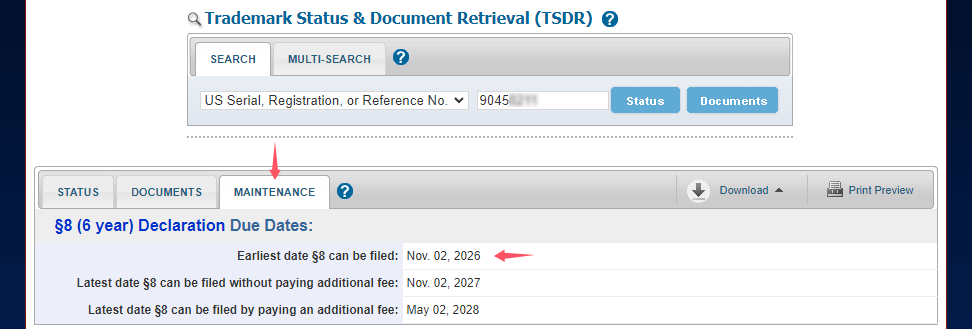
Be aware that your registration will be canceled if you do not file the required documents below during the specified time periods:
Requirements in the First Ten Years*
What and When to File:
• First Filing Deadline: You must file a Declaration of Use (or Excusable Nonuse) between the 5th and 6th years after the registration date. If the declaration is accepted, the registration will continue in force for the remainder of the ten-year period, calculated from the registration date, unless canceled by an order of the Commissioner for Trademarks or a federal court.
• Second Filing Deadline: You must file a Declaration of Use (or Excusable Nonuse) and an Application for Renewal between the 9th and 10th years after the registration date.
Requirements in Successive Ten-Year Periods*
What and When to File:
• You must file a Declaration of Use (or Excusable Nonuse) and an Application for Renewal between every 9th and 10th-year period, calculated from the registration date.
◆ What is the process for transferring ownership?
For a U.S. trademark, the owner or the attorney will file the necessary forms, submit the properly signed Trademark Assignment Agreement, and pay the required government fees to the United States Patent and Trademark Office (USPTO). Officials will review the submissions and record the transfer if no errors are found. If any mistakes are identified, the USPTO will notify the filer to make corrections until the transfer is approved.
◆ What will the buyer receive as a result of the ownership transfer?
The buyer will obtain trademark ownership, entire interest and the goodwill.
In this process, we will provide the buyer with the Assignment Filing Receipt and Assignment Recordation Notice.
◆ What changes can we expect to see on the official page?
The USPTO system will record the assignment details and update the information to reflect the new owner.
◆ How long does the transfer take?
The transfer process takes approximately 8-12 weeks, depending on the USPTO's current processing times.
Application:
➜ After you file enrollment forms and submit the required files, a relevant "Case" will be created by Amazon in the "Case Log".
➜ If your submissions are qualified, Amazon will send an email including a "verification code" to the email address associated with the trademark representative.
➜ You will need to reply to the "Case" with the above-mentioned "verification code".
➜ Amazon will approve your brand registry if no mistakes occur.
(Guide of Amazon Brand Registry)
Benefits:
◆ After the registry, you can create product listings with the brand.
◆ You get A+ Content, enhanced brand content, brand analytics and more.
◆ Amazon doesn't seem to care which class your trademark is in, they give you coverage across all categories (which could change at any time).
◆ An Auth-Code, also known as an EPP code, authorization code, transfer code, or Auth-Info Code, is a generated passcode required to transfer an internet domain name between domain registrars; the code is intended to indicate that the domain name owner has authorized the transfer. GoDaddy.com and NameCheap.com are known as famous domain registrars.
◆ Using the Auth-Code shared by the owner, you can seamlessly transfer the domain name to your domain registrar account.
◆ The transfer of a domain name between two registrars typically takes 5-7 days, while the transfer between two accounts within the same registrar usually takes only minutes or seconds. See Domain Transfer Between Registrars.